Chapter II — Martial & Moral
Symphonicity
Chapter II — Martial & Moral
Symphonicity
-
DateNov 15, 2026
-
Event Starts3:00 PM
-
Doors Open2:00 PM
-
AvailabilityOn Sale Now
-
Nov 15 / 2026 Sunday at 3:00pmBuy Tickets
Event Details
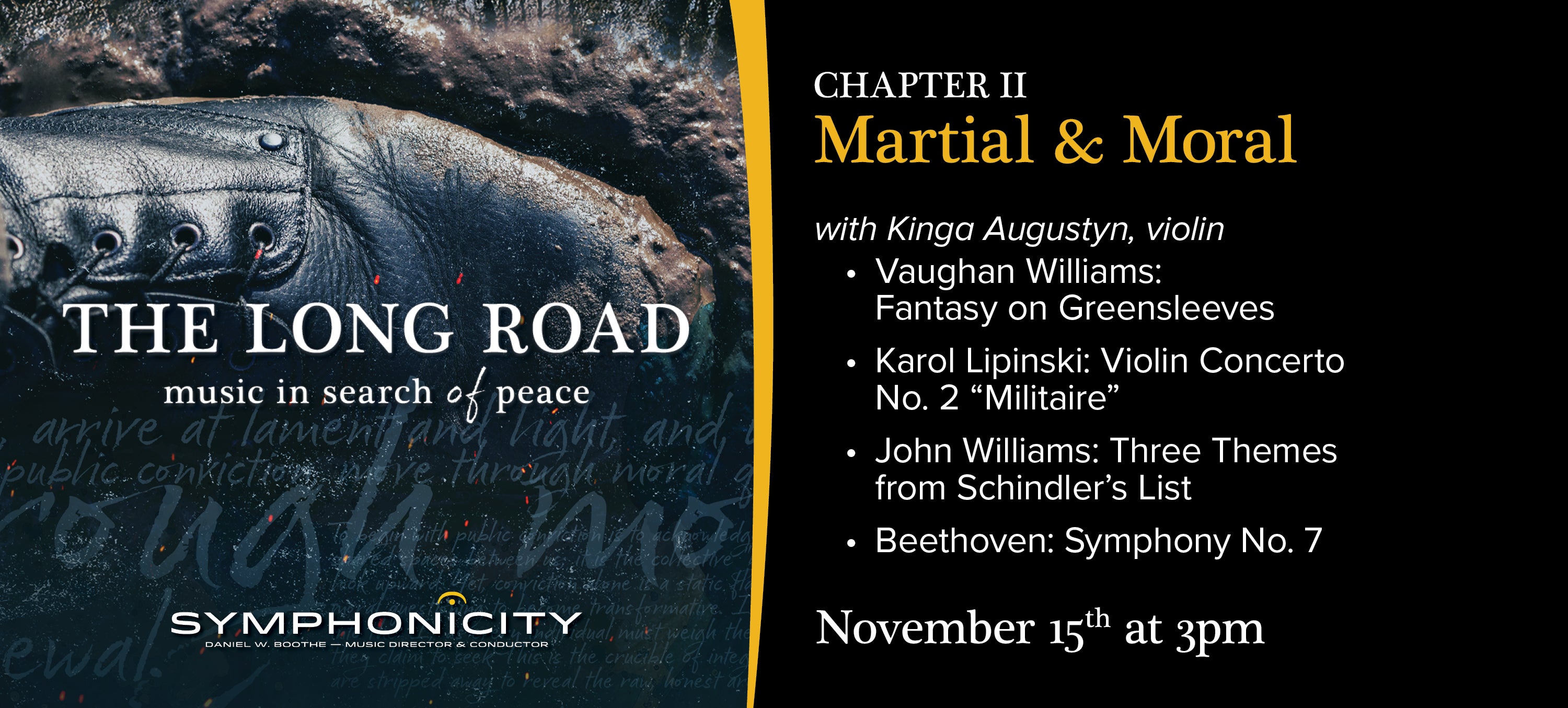
Can music capture both the glory nations attach to conflict and the human cost hidden beneath it? Martial & Moral, the second chapter of The Long Road: Music in Search of Peace, explores that tension across nearly two centuries. Vaughan Williams' beloved Fantasia on Greensleeves begins in a world of pastoral beauty—though the centuries-old English melody itself once served as a military march. Violinist Kinga Augustyn then unleashes the virtuosity and martial character of Karol Lipiński’s rarely heard Violin Concerto No. 2 "Militaire." The mood turns deeply personal in John Williams' Three Themes from Schindler's List, whose haunting melodies have become an enduring musical expression of memory, loss, and humanity. Then Beethoven's magnificent Symphony No. 7 takes over—propulsive, defiant, exuberant, and relentlessly alive. The symphony premiered in wartime Vienna in 1813 at a benefit concert alongside Beethoven's Wellington's Victory, celebrating Napoleon's defeat at the Battle of Vitoria. This concert travels from tranquility through military spectacle and remembrance to one of the most electrifying affirmations of life in the symphonic repertoire.
PROGRAM
Ralph Vaughan Williams — Fantasia on Greensleeves
Karol Lipiński — Violin Concerto No. 2 in D major, Op. 21 “Militaire”
John Williams — Three Themes from Schindler’s List
Ludwig van Beethoven — Symphony No. 7
Kinga Augustyn, violin
Daniel W. Boothe, conductor
Related Links